Cybersecurity and Electrical Transformers: Understanding the Threats and Considering Solutions
In our ever more connected world, we depend on electricity for almost everything. That is why electrical transformers, essential components of our energy infrastructure, have become potential targets for cyberattacks. Even though such attacks remain rare, constantly evolving technology and the growing sophistication of cybercriminals pose major challenges. In this post, we will look at the potential threats and discuss solutions that can help strengthen the security of this vital infrastructure.
Cyber Threats:
Nowadays, transformers are increasingly targeted by cybercriminals. For example, a transformer imported from China was seized in the United States for inspection to discover possible malicious implants. However, this type of attack is often linked to counterfeit products rather than an intent to sabotage.
Modern transformers, increasingly sophisticated, are equipped with features that could be targeted. For example, some have active control functions. A key component of modern transformers is the on-load tap changer (OLTC), which can adjust the transformation ratio according to the current load, thereby correcting the output voltage. If a malicious actor took control of the OLTC, they could cause voltage fluctuations that disrupt the electrical grid.
Security Solutions:
Despite these risks, it is important to note that the chances of a successful attack remain relatively low. Transformer manufacturers have every interest in ensuring the security of their products, as a successful attack could have disastrous consequences for their reputation and business.
This is where important cybersecurity regulations come in, such as the European Union's NIS Directive and NERC-CIP (North American Electric Reliability Corporation - Critical Infrastructure Protection). These regulations require companies to manage the vulnerabilities of their systems and to put adequate responses in place based on a risk assessment.
The NIS Directive, for example, requires EU member states to put national cybersecurity strategies in place and to set up computer security incident response teams. NERC-CIP, on the other hand, is a set of standards aimed at securing critical electricity infrastructure in North America.
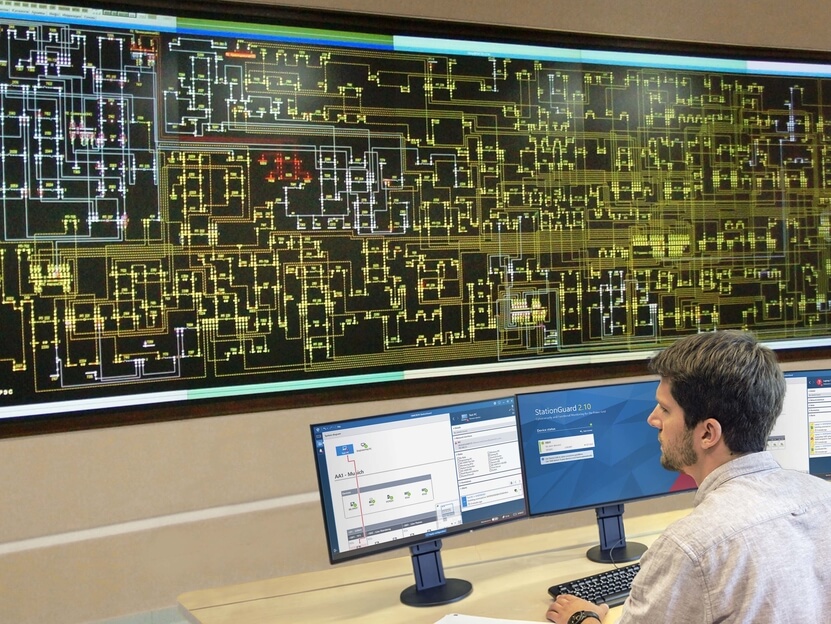
Companies such as Omicron have developed specific solutions to combat these threats. StationGuard is a solution that builds a database of known vulnerabilities for power grid automation. This database allows a faster response to potential threats.
In short, while cyberattacks on power transformers remain a serious threat, industry players and regulators are working tirelessly to minimise these risks. The combination of strict regulations, such as the EU's NIS Directive and NERC-CIP, together with the implementation of sophisticated solutions such as Omicron's StationGuard, provides a higher level of protection against potential attacks.